

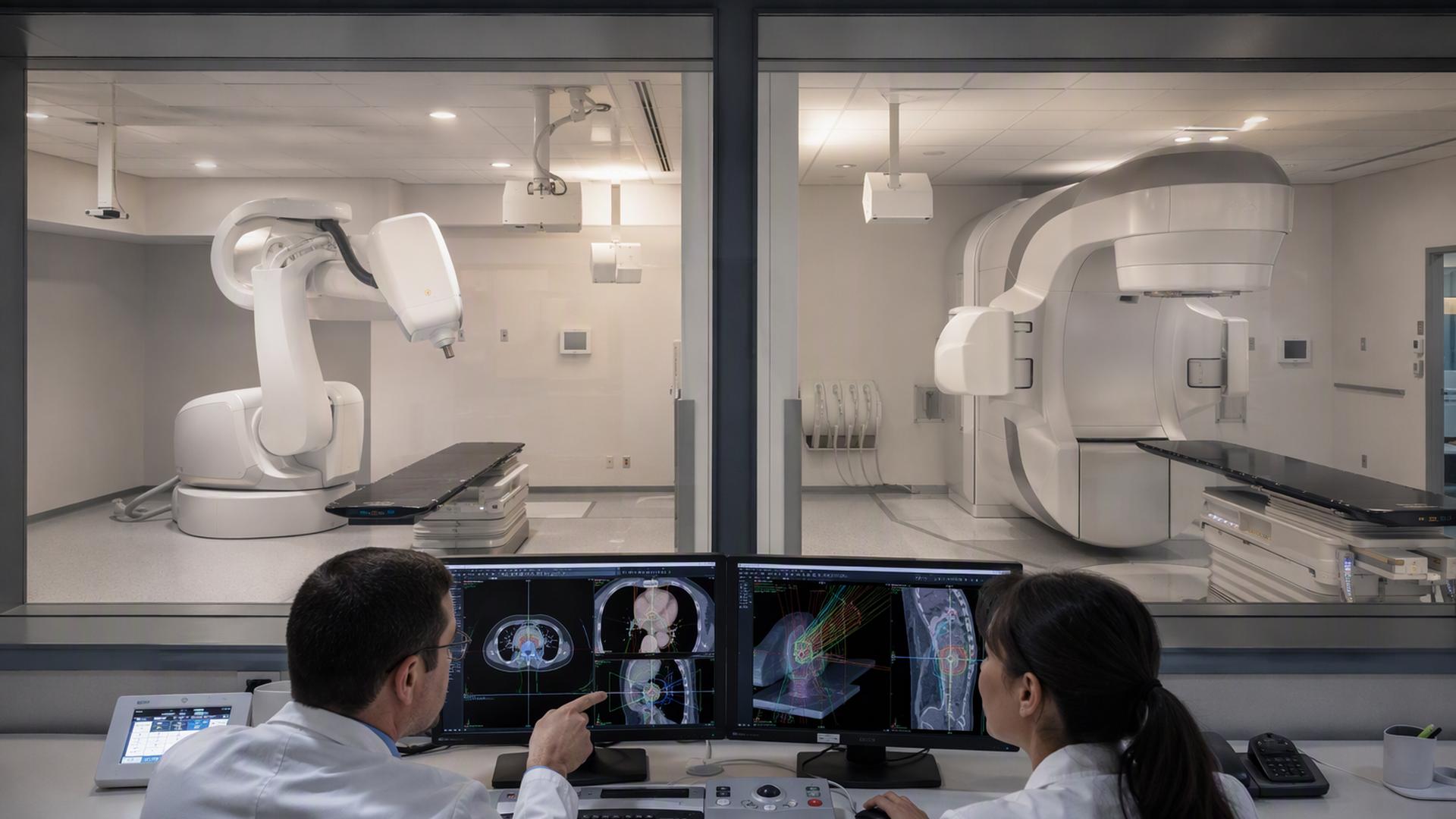
CyberKnife vs Conventional Radiotherapy: Who Is Eligible?
Radiotherapy is not a single treatment. Machines, schedules and techniques differ, and a person offered one form may hear about another from a friend or an online search. Understanding how CyberKnife differs from conventional radiotherapy, and who is likely to be eligible, makes those conversations easier.
Two ways of delivering radiation
Conventional radiotherapy usually gives a relatively small dose of radiation each day over several weeks. The aim is to damage cancer cells while allowing normal tissue to recover between sessions. It is widely available, well established and suits a very wide range of cancers and situations.
Stereotactic treatments use fewer sessions at higher doses, aimed very precisely at a defined target. The CyberKnife cancer treatment page of Dr James Wilson's practice describes CyberKnife as a robotic system, says that treatments usually need fewer sessions than traditional radiotherapy, which it describes as often involving daily sessions lasting six weeks or more, and says that scans needed for planning are discussed before a recommendation is finalized.
The two approaches are not rivals in every case. Each has situations where it fits best, and some patients receive both at different times. The clinical team recommends according to the case in front of them.
What stereotactic radiotherapy is
Cancer Research UK explains that stereotactic radiotherapy gives radiotherapy to a tumour from many different directions so that the beams meet at the tumour. The tumour receives a high dose, while surrounding tissues receive a much lower one, which lowers the risk of side effects. People usually have between 1 and 8 treatments.
Terms vary. Stereotactic treatment of the body may be called stereotactic body radiotherapy, or SBRT, or stereotactic ablative radiotherapy, or SABR. When it is used on the brain it is called stereotactic radiosurgery, which is usually a single treatment.
Different machines can deliver it. It is usually given on a linear accelerator, but it can also be given on a CyberKnife, which has a robotic arm that moves around the treatment couch to give radiation from different angles. Cancer Research UK adds that stereotactic radiotherapy is available at many UK centres, including NHS radiotherapy units with specialized machines such as CyberKnife. This is useful for patients to know, because it means that a decision about technology need not be a decision about private versus NHS care. Ask your NHS oncologist whether stereotactic treatment would be appropriate for you and, if so, where it is delivered. If the answer is yes and a centre is far away, ask about travel support.
Who may be eligible
Eligibility depends on the tumour, the patient and the machine. Cancer Research UK says stereotactic radiotherapy is mainly used to treat very small cancers, including cancers in the lung and cancers that started in or spread to the liver, and notes it may be used for cancers in other sites such as the spine and areas of spread in the brain.
Doctors weigh several factors. These include the size and number of tumours, their position near critical structures, lung function and general fitness, previous radiotherapy to the same area and whether the cancer is limited to a few sites. Large tumours or widespread disease are usually better treated in other ways.
Re-treatment is one area of interest. Cancer Research UK states that stereotactic treatment can treat areas of the body that have had radiotherapy before, and Dr Wilson's practice says most of its patients can receive multiple treatments or be re-treated with CyberKnife. Whether that is safe in a given case depends on the dose previously given and the tissue involved.
Side effects and trade-offs
Because stereotactic treatment targets the tumour precisely, Cancer Research UK states that the risk of damage to surrounding normal tissue is low and side effects may be less than with other types of radiotherapy. That does not mean there are none. Fatigue, local skin changes and effects specific to the treated area can occur, and some effects appear months later.
Sessions can be long. Cancer Research UK notes that treatment may take between 30 minutes and four hours depending on the type of cancer and its position, and that CyberKnife can treat multiple tumours at the same time. Patients must lie still, and breaks can be planned for longer sessions.
The practical trade-off is fewer visits against longer individual visits and a narrower range of suitable tumours. Conventional radiotherapy has more visits and a wider range of uses. Neither is better in the abstract, and the right choice depends on what is being treated.
Questions to ask your oncologist
A short list helps in the consultation. Write it down and bring it with you.
- Is my tumour a suitable size and position for stereotactic treatment?
- Would conventional radiotherapy or another approach work as well for my situation?
- How many sessions would I need, and how long is each one?
- What side effects are most likely, and which would need urgent attention?
- Is this available on the NHS near me, and what would it cost privately?
- What would happen if the cancer came back in the same area?
- Who will coordinate my care alongside my GP and NHS team?
If the answers raise more questions, ask for a second opinion. A good oncologist expects it. Keep the list with your notes afterward so that you can compare what you were told at different centres, and ask each team to write down the plan in plain language that you can show to your GP.